


Introduction
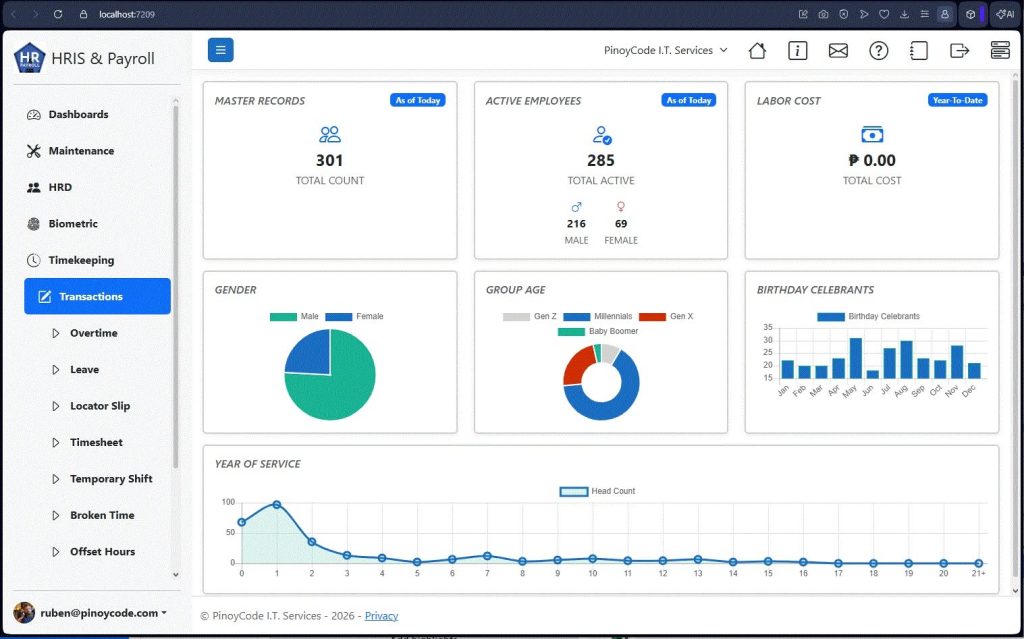
Modern organizations generate vast amounts of employee data every day. From attendance records and performance evaluations to workforce productivity metrics and engagement scores, businesses need a centralized way to analyze and visualize this information effectively. An HRIS EF Core Employees Analytics Performance Dashboard provides a powerful solution by combining Human Resource Information Systems (HRIS), Entity Framework Core (EF Core), and advanced analytics dashboards.
This comprehensive approach enables HR teams, managers, and executives to make data-driven decisions, improve employee performance, optimize workforce planning, and enhance overall organizational productivity.
In this article, we’ll explore what an HRIS EF Core Employees Analytics Performance Dashboard is, its key features, benefits, implementation strategies, and why it has become an essential tool for modern human resource management.
What Is an HRIS EF Core Employees Analytics Performance Dashboard?
An HRIS EF Core Employees Analytics Performance Dashboard is a business intelligence solution that integrates employee data stored within a Human Resource Information System (HRIS) using Microsoft’s Entity Framework Core (EF Core) technology. The dashboard transforms raw employee information into meaningful visualizations, reports, and performance indicators.
The system typically consolidates data from:
- Employee profiles
- Attendance and time tracking
- Payroll systems
- Performance evaluations
- Training and development records
- Recruitment metrics
- Employee engagement surveys
- Department productivity reports
By leveraging EF Core, organizations can efficiently manage database interactions while providing real-time analytics and reporting capabilities.
Why Organizations Need Employee Analytics Dashboards
Traditional HR processes often rely on spreadsheets and manual reporting methods that consume valuable time and limit visibility into workforce trends.
An employee analytics dashboard solves these challenges by offering:
Real-Time Workforce Visibility
HR managers gain immediate access to critical workforce metrics without waiting for manually generated reports.
Data-Driven Decision Making
Analytics dashboards help organizations identify trends, performance gaps, and opportunities for improvement.
Improved Employee Performance
Managers can monitor key performance indicators (KPIs) and take proactive measures to support employee growth.
Strategic Workforce Planning
Organizations can forecast staffing requirements, turnover risks, and future talent needs.
Core Components of an HRIS EF Core Performance Dashboard
- Employee Management Module
The employee management section serves as the foundation of the dashboard.
Key features include:
- Employee directory
- Organizational hierarchy
- Department assignments
- Job roles and positions
- Employment status tracking
This module provides a centralized repository for workforce information.
- Performance Analytics
Performance analytics help organizations evaluate employee effectiveness through measurable metrics.
Common indicators include:
- Goal completion rates
- KPI achievement percentages
- Performance review scores
- Productivity benchmarks
- Manager assessments
These insights support fair and objective performance evaluations.
- Attendance and Time Analytics
Attendance tracking plays a critical role in workforce management.
Dashboard metrics may include:
- Absenteeism rates
- Late arrivals
- Overtime hours
- Leave utilization
- Shift attendance trends
HR teams can quickly identify patterns affecting productivity.
- Employee Engagement Metrics
Engaged employees are more productive and likely to stay with the organization.
Analytics dashboards often track:
- Employee satisfaction scores
- Survey participation rates
- Engagement trends
- Retention indicators
- Team morale measurements
- Recruitment Analytics
Organizations can monitor hiring effectiveness through recruitment dashboards.
Key recruitment KPIs include:
- Time-to-hire
- Cost-per-hire
- Candidate conversion rates
- Interview success ratios
- Vacancy fulfillment metrics
The Role of Entity Framework Core (EF Core)
EF Core serves as the data access layer that connects the HRIS application to its underlying database.
Benefits of EF Core in HR Analytics Systems
Simplified Data Access
EF Core reduces the complexity of database operations through object-relational mapping (ORM).
Faster Development
Developers can work with strongly typed entities instead of writing extensive SQL queries.
Improved Maintainability
Code-first development promotes cleaner architecture and easier updates.
High Performance
EF Core supports optimized querying, lazy loading, eager loading, and caching mechanisms.
Cross-Platform Compatibility
Applications built using ASP.NET Core and EF Core can run across multiple environments.
Essential Dashboard KPIs for Employee Analytics
A successful HRIS dashboard should include meaningful workforce metrics.
Employee Performance KPIs
- Performance rating average
- Goal completion percentage
- Productivity score
- Training completion rate
- Competency assessment scores
Workforce KPIs
- Total employee count
- Active workforce ratio
- Department headcount
- Employee tenure distribution
- Workforce diversity metrics
Retention KPIs
- Employee turnover rate
- Retention percentage
- Resignation trends
- Exit interview insights
- Flight risk indicators
Attendance KPIs
- Attendance percentage
- Absenteeism rate
- Overtime utilization
- Leave balance tracking
- Work schedule adherence
Key Features of an Advanced HRIS Analytics Dashboard
Interactive Visualizations
Modern dashboards provide:
- Charts
- Graphs
- Heat maps
- Performance scorecards
- Trend analysis reports
These visual tools make complex data easier to understand.
Custom Reporting
Users can generate reports based on:
- Departments
- Teams
- Job roles
- Date ranges
- Performance categories
Predictive Analytics
Advanced systems utilize machine learning and historical data to predict:
- Employee turnover
- Workforce shortages
- Performance trends
- Recruitment requirements
Role-Based Access Control
Sensitive employee information remains secure through:
- Permission-based access
- Department-level visibility
- Administrative controls
- Audit logging
Benefits of Implementing an HRIS EF Core Employees Analytics Performance Dashboard
Increased Productivity
Automated reporting significantly reduces administrative workloads.
Better Workforce Planning
Organizations gain visibility into future staffing needs and resource allocation.
Enhanced Employee Development
Performance insights help identify training opportunities and career growth paths.
Reduced Employee Turnover
Data-driven retention strategies improve employee satisfaction and engagement.
Stronger Executive Decision-Making
Leadership teams can align workforce strategies with organizational goals.
Technical Architecture Overview
A typical HRIS EF Core Analytics Dashboard architecture includes:
Frontend Layer
- ASP.NET Core MVC
- Blazor
- Angular
- React
Backend Layer
- ASP.NET Core Web API
- Business Logic Services
- Authentication Services
Data Access Layer
- Entity Framework Core
- Repository Pattern
- Unit of Work Pattern
Database Layer
- Microsoft SQL Server
- PostgreSQL
- MySQL
Analytics Layer
- Power BI Integration
- Custom Reporting Engine
- Data Visualization Libraries
Best Practices for Building an HRIS Analytics Dashboard
Define Clear KPIs
Focus on metrics aligned with business objectives.
Ensure Data Quality
Accurate analytics depend on clean and consistent data.
Optimize Database Performance
Use EF Core best practices:
- Query optimization
- Database indexing
- Pagination
- AsNoTracking for reporting queries
Design User-Friendly Dashboards
Present information clearly and avoid cluttered interfaces.
Prioritize Security
Protect sensitive employee information through encryption, authentication, and authorization controls.
Future Trends in HR Analytics
The future of employee analytics dashboards includes:
Artificial Intelligence Integration
AI-driven insights will automate workforce recommendations and performance forecasting.
Predictive Workforce Analytics
Organizations will increasingly rely on predictive models for strategic planning.
Real-Time Monitoring
Cloud-native HRIS platforms will provide instant access to workforce intelligence.
Personalized Employee Dashboards
Employees will gain access to individual performance analytics and development recommendations.
Conclusion
An HRIS EF Core Employees Analytics Performance Dashboard empowers organizations to transform workforce data into strategic business intelligence. By combining HRIS capabilities, EF Core’s efficient data management, and powerful analytics tools, businesses can improve employee performance, reduce turnover, optimize workforce planning, and support informed decision-making.
As organizations continue embracing digital transformation, employee analytics dashboards will play an increasingly important role in driving productivity, engagement, and long-term business success. Investing in a robust HRIS analytics solution today can create a more agile, data-driven workforce for the future.